WARNING: This website contains facts and opinions some may find offensive...
PARASITES
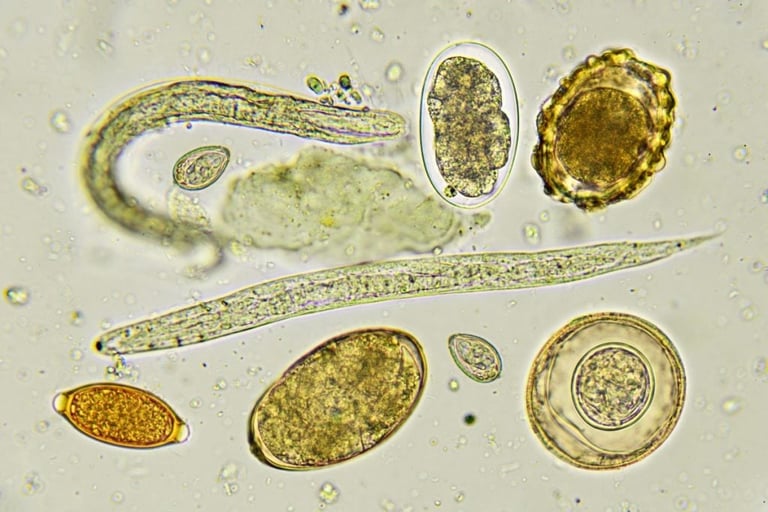
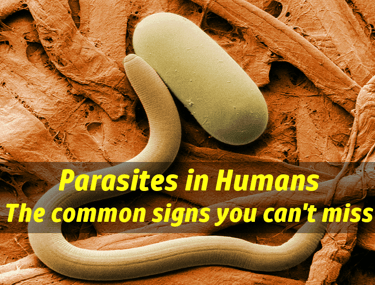
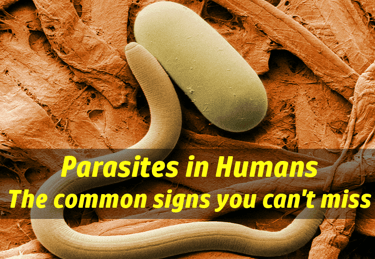
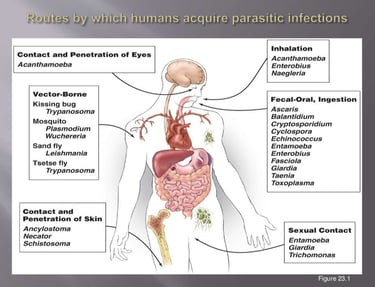
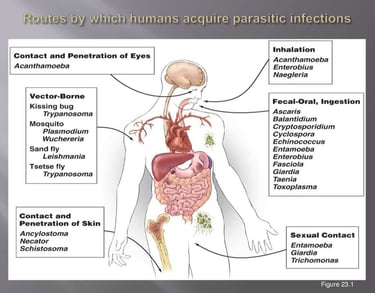
Parasitic Origins: Unraveling the Mystery of Their Existence
Everyone has parasites! Though parasites are never discussed by doctors—who are in fact gagged and prevented from mentioning it when parasites are indicated by laboratory tests—everyone has parasites and parasites are a big health issue. If we address parasites, we can free a lot of people of their symptoms.
The way parasites work in the body is we all get them. And we were told, unfortunately, in American medical schools that we didn’t need to deal with them ‘cause those were Third World country problems. But that’s not true. One of the factoids I remember from medical school is that you’re more at risk of having MS if you had a lap dog before the age of 5 and I remembered it because I thought that’s such a funny fact. Why would that have anything to do with a neurologic disease, having a dog when you were 4 years old? Well, it’s because look at little kids, they get licked on the face by the dogs, and dogs have parasites, but they are never treated in America today. We used to, but now we don’t treat children for parasites. You might treat the dog. And why, if you think the dog has parasites, so do humans.
And so, the bottom line here is we purposely were misled about the parasites so that they’ve been building up in generations of us and we’ve gone untreated. We haven’t been paying attention to a major health threat and that can’t be by accident. And now, they come along with ways of dumbing down our immune system in such a way that allows the parasites to become active. So what happens in the body is you accumulate parasites over a lifetime in your body. It walls them off into little cysts. You’re young and your immune system is very good, it keeps the parasites in those cysts in check. But if something happens to you that causes your immune system to go down, either you’ve got a bad diet, you get older, older people have problems that you don’t have when you’re young.
The three primary types of parasites causing diseases in humans are ectoparasites, helminths, and protozoans.
1. Ectoparasites: These parasites live on the exterior of their host and are often vectors transmitting infections through blood. Examples include fleas, head lice, pubic lice, mites, and ticks. Fleas and lice can be transmitted through close contact or sharing personal items, while ticks are commonly found in wooded areas or grassy fields.
2. Helminths: These parasitic worms reside in the gastrointestinal tract, ranging from greater than 1 millimeter to over 1 meter in size. The main types include flukes, tapeworms, and roundworms. Flukes spread through contaminated water or aquatic animals, tapeworms in undercooked meat or contaminated food and water, and roundworms through infected soil.
3. Protozoans: One-celled organisms not visible to the naked eye, protozoans may live in the intestines or blood. They spread through contaminated food or water, person-to-person contact, or vectors. Examples include amoebas causing dysentery, ciliates causing dysentery (Balantidium coli), flagellates causing giardiasis (Giardia intestinalis) and sleeping sickness (Trypanosoma brucei), and sporozoans causing malaria (Plasmodium) and cryptosporidiosis (Cryptosporidium).
Parasites typically come from water sources or your pets and that’s usually how you get them. You need to be very mindful of where it is when your report comes back, when it tells you what kind of parasite you have, it also tells you in a comprehensive stool analysis report where the most likely sources are you’re being contaminated from. If it is your pet, make sure you’re not kissing your pet’s fur, petting the fur, and not washing your hands before you touch your mouth because that’s how the eggs of those parasites get inside your body.
Parasites can have significant impacts on human health and well-being. Some of the effects of parasitic infections include the following:
• Disease Transmission: Parasites can carry and transmit diseases to their hosts. These diseases can range from mild to severe and can affect various organs and systems in the body.
• Nutritional Deficiencies: Some parasites can interfere with the absorption of nutrients in the host’s body, leading to malnutrition and other related health issues.
• Organ Damage: Certain parasites can cause damage to organs and tissues in the host’s body. For example, liver flukes can cause liver damage, while intestinal parasites can lead to inflammation and damage to the intestines.
• Immune System Response: Parasitic infections can trigger immune responses in the host’s body, leading to inflammation and other immune-related symptoms.
• Economic and Social Impact: Parasitic infections can have economic and social consequences, particularly in developing countries. They can affect productivity, cause healthcare costs, and impact the overall well-being of affected individuals and communities.
And 90% of all human beings in America, supposedly, have parasites, per the CDC, and then 100%, say parasitologists, 100% of all pet owners of dogs and cats all have parasites. They’re all convinced they do. You need to be very careful about how you let your dogs and cats lick on you, lick your hands, and then touch your mouth without washing your hands.
You transfer the eggs of those parasites onto your hands when you touch them, touch your mouth, swallow the eggs, and then they hatch inside your body. Pets have the potential to harbor and transmit parasites to humans.
Certain parasites found in dogs and cats can infect people, with a higher likelihood of transmission from young animals like puppies and kittens that carry roundworms and hookworms.
Furthermore, wild animals may serve as carriers of parasites that can also affect humans. For instance, individuals can contract the raccoon parasite Baylisascaris if they inadvertently ingest soil contaminated with feces from infected raccoons. Awareness of these potential transmissions highlights the importance of preventive measures and responsible pet care.
In 2016, renowned pathologist Dr. Alan MacDonald performed autopsies on patients who died from multiple sclerosis (MS), and, found LIVE parasites in their central nervous systems! For more than 100 years, veterinarians have known that animals experience debilitating symptoms when small parasitic roundworms attack their central nervous systems, including:
Fatigue
Numbness
Weakness in their limbs
Poor balance
Spasticity
Drop foot
Paralysis
And blindness
So, why has it taken a century for doctors and scientists to realize that these symptoms mirror the ones experienced by people with MS?
Parasitism has a depressing effect on blood copper and hemoglobin levels, even when administered parenterally. Parasitism can aggravate existing hypocupremia and possibly influence the expression of swayback disease.
Copper is used to kill worms/parasites: https://en.wikipedia.org/wiki/Copper(II)_sulfate#Niche_uses
In veterinary practice it is used as an anthelmintic (dewormer), emetic and fungicide and for treating copper deficiency in ruminants. (MERCK, 1996; DOSE, 1993).
PARASITES AND CANCER
The most common cause of what you’re being diagnosed as a tumor or a metastatic cancer of any kind, is actually parasite infections. Parasites have been misdiagnosed as cancerous tumors for the entire history of cancer. They have actually made sure that every person going through med schools all throughout America and Canada, believe that parasites don’t exist in America.
A typical MD will say “Parasites don’t exist in this country.” Have they never owned a dog or cat in this country? The moment you do, and you take the dog or cat to a veterinarian for a checkup, the first thing they’re going to check for is heartworms. Heartworms are parasites called roundworms or nematodes. Every dog and cat have a parasite called roundworms or nematodes. Heartworms are contagious to their owners, and every veterinarian in America knows it.
Why does every piece of pork served in restaurants in America have to be cooked more than rare? Because parasites are very prevalent in pork meat. So parasites are very common. If you go on the CDC’s website, every MD who thinks parasites don’t exist in America, go read your own medical statements on the CDC’s website. The CDC states right now, the most common parasites are contracted in America through the tap water.
The second most common source is our food. The third is through our soil. The fourth is through our pets. So if the CDC is publishing that Americans commonly get parasitic infections, but the medical schools are teaching that parasites don’t exist in this country, they create an army of white-coat minions who all believe the same thing coming out of med school, handed their diploma, they will declare “Parasites don’t exist in America, Parasites don’t exist in America, Parasites don’t exist in America,” because they’ve been told for four years straight, parasites don’t exist in America, and we are products of propaganda.
It exists in every institution, in every educational facility in America. They are brainwashed to repeat what they want them to tell everybody they talk to. Patients can easily go to the CDC website and then fire their doctor, because they now know they’re not astute on knowledge pertaining to parasites in America.
Parasites are absolutely indicated in GI symptoms, brain tumors, and cancers.
The number one cause for MS in America is parasites. In 2016, researchers in Colorado asked for the brain samples and the CSF samples of 10 MS people who died from multiple sclerosis. The LA coroner’s office sent 10 brains and 10 cerebral spinal fluid samples to this lab, and they dissected every one of the brains of every MS patient.
Every single one of the samples had multiple 3-to-6-inch worms burrowing holes in the brains of the MS patients called roundworms, which are the same ones dogs and cats have, called heartworms. Every cerebral spinal fluid sample had little worms swimming in it. These are roundworm parasites that you get from your dogs and cats.
You can also get parasites from water and from your food. But for 10 Americans who had MS, the official cause of death was MS, then had their bodies dissected only to find roundworm parasites in them that you get from dogs and cats, to say parasites don’t exist in this country.
There’s a reason that every neurologist in America, who is testing the MS brains of patients, is only seeing lesions on the brain, see little holes in the brain in MS patients each year, and they’re moving. The lesion, one hole shows up here one year, the next year, it’s over here, nest year, it’s over here. And the MS patient’s symptoms are changing every year, but the neurologist is looking at them and saying, “Well, these are just side effects and symptoms and signs of MS.” Because that’s what they were told.
There’s actually worms eating the brain matter in the patient’s brain, and as it’s eating it, it is creating the symptoms as it damages one cell after another. The most common prescription drug that every pet owner in America is giving their dogs or cats at home for heartworms is called Heartgard. That’s the brand name. The same drug that treats the worms that are in every MS patient. The drug is ivermectin. Ivermectin is an anti-parasitic drug.
Ivermectin binds to nicotine receptors, just not as potent as nicotine does. If you’re treating a snake venom-induced rapid turbo cancer, ivermectin would work. If the venom in the body is targeting nicotine receptors, it would help dissolve that tumor too, just like nicotine did in the king cobra cobratoxin. Just like in the alpha-cobratoxin, alpha-conotoxin, glioblastoma study where they reversed it with nicotine. This is why ivermectin can work for snake venom-caused tumors, and why ivermectin also helps to beat cancers of all kind created by parasites.
A scientist in Canada was able to cure a hundred different cancers in five days, and all she did was threat parasites in the liver of every patient.
Three specific plant supplements you can use that kill off the parasites causing the cancer, all one hundred of them, and found that red clover, walnut hulls, not black walnut hulls, but the green hulls on the tree before the walnut falls. The green hull, the little shell over a walnut before it turns black and dies, and wormwood, which is antiparasitic. So wormwood, red clover, and green walnut hulls, in combination as a supplement, would kill those actual parasites and reverse the cancers.
The only major contributing factor to allowing those parasites to hatch and then live inside your organs in your body, to eventually get inside of most people’s livers is ethyl alcohol, the consumption of alcohol, drinking alcohol dissolves the outer shell of the eggs of the parasites, allowing the worms to come out.
Humans are not part of the normal parasite’s lifecycle. They just travel through us, through our food, through our soil, and through our water to come out through our feces. And then when our feces reached the ground, before we had toilets, when we would poop on the ground, water from rain would wash the eggs into ponds, rivers, and streams. Then those eggs would hatch in the water of the pond, and those little worms would swim inside the body of a snail. They swim into the body of the snail and lay hundreds of thousands of eggs inside the snail, then the snail’s body is what’s feeding these little bitty eggs. And as they hatch, the hundreds of thousands of little worms come swimming out of the snails. You can watch this on YouTube.
They come swimming out of the snail and go swimming into the water. So, minnows, frogs, and fish eat the little parasite worms. Then later, as they grow inside the fish’s body, then herons and eagles come down and eat those fish. Then the worm now goes from the fish’s body into the bird’s body. And this is their normal life cycle, it’s not humans. The only thing allowing these eggs of these parasites to hatch in our bodies is alcohol consumption. So, you might want to do three or four liver cleanses if you’ve got cancer.
You must stop all alcohol consumption. You need to get on red clover, you need to get on walnut hulls, the green ones, and you need to get on sweet wormwood, which actually has the exact same mechanism of action as ivermectin does. Most cancer, tumors, ovarian cysts, uterine fibroids, breast cancer tumors, multiple myeloma, are all actually parasitic egg sacs growing on the tissues of those organs. And the only way you are going to get rid of them is if you use antiparasitic drugs or antiparasitic herbs, and minerals. Get alcohol out of your body and change your diet.
Research, including in vitro and animal studies, reveals that some parasites can directly cause cancer, while others indirectly stimulate cancer development. Interestingly, certain parasites can elicit an immune response with antitumoral activity. Parasites can exhibit both tumoral and antitumoral effects by influencing immune responses, preventing metastasis, regulating angiogenesis, inhibiting proliferative signals, and modulating inflammatory responses associated with cancer development.
Cancer is a life-threatening condition characterized by uncontrolled cell proliferation in various body tissues, while parasites are harmful organisms that can lead to death. Both cancer and parasites share similarities in their ability to independently grow, resist apoptosis, and evade the immune system. This makes it challenging for the body to eliminate them completely.
Parasites The connection between parasitic infections and the development of cancer has been recognized in various instances, highlighting the role of parasites as potential catalysts in the progression of certain malignancies. Several parasites have been linked to an increased risk of cancer through chronic inflammation, immune system modulation, and direct damage to host tissues. Some notable examples include:
• Helicobacter pylori and Gastric Cancer: While not a parasite, the bacterium Helicobacter pylori is associated with gastric cancer. Chronic infection with H. pylori can lead to inflammation of the stomach lining, which, over time, may contribute to the development of gastric cancer.
• Schistosoma haematobium and Bladder Cancer: This parasitic flatworm is known to cause schistosomiasis. Chronic infection with Schistosoma haematobium has been linked to an increased risk of bladder cancer. The parasite’s eggs can cause chronic inflammation and damage to the bladder wall, potentially leading to carcinogenesis.
• Clonorchis sinensis and Cholangiocarcinoma: This liver fluke is associated with cholangiocarcinoma, a type of bile duct cancer. Infection occurs through consuming raw or undercooked fish containing the fluke larvae. Chronic infection can lead to inflammation and damage to the bile ducts, increasing the risk of cancer.
• Opisthorchis viverrini and Liver Cancer: Similar to Clonorchis sinensis, Opisthorchis viverrini is a liver fluke associated with liver cancer. The ingestion of raw or undercooked fish containing the fluke larvae can lead to chronic infection, inflammation, and eventual development of liver cancer.
• Human Papillomavirus (HPV) and Cervical Cancer: Although not a parasitic infection, certain strains of HPV are implicated in cervical cancer. HPV is a sexually transmitted virus that can cause persistent infections, leading to the development of cervical cancer over time. Parasites are subtle but strong controllers of the body’s defense system. They can quiet down some parts of the defense system and change how others work. For instance, they can affect how certain cells present information, influence the production of certain molecules and even guide the development of specific immune cells. There are three main types of parasites:
• Ectoparasites: Which live on the outside of the host and are vectors that transmit diseases. Examples include fleas, lice (head and pubic), mites (causing scabies), and ticks.
• Helminths: These are parasitic worms residing in the gastrointestinal tract. Helminths are visible to the naked eye and include flukes (spread through contaminated water or aquatic animals), tapeworms (found in the intestines, spread through contaminated food or water), and roundworms (small parasites in the intestines, spread through infected soil or feces).
• Protozoans: One-celled organisms, often microscopic, living in intestines, blood, or tissues. Examples include amoebas (causing dysentery), ciliates (e.g., Balantidium coli causing dysentery), flagellates (e.g., Giardia intestinalis causing giardiasis), and sporozoans (e.g., Plasmodium causing malaria and Cryptosporidium causing cryptosporidiosis). They may spread through contaminated food or water, person-to-person contact, or vector bites. Parasites, also hazardous organisms, share similarities with cancer cells in their ability to independently thrive and multiply, resist apoptosis, and elude the immune system. Eliminating cancer cells and parasites proves challenging for the body due to these shared characteristics.
Research, including in vitro and animal studies, reveals that certain parasites not only directly cause cancer but also indirectly promote cancer development through varied mechanisms. Interestingly, some parasites can trigger an immune response with antitumoral properties, affecting factors such as metastasis, angiogenesis, proliferative signals, and inflammatory responses linked to cancer development.
Cancers are characterized by the uncontrolled growth of abnormal cells that can invade neighboring tissues, contributing to a significant global health burden. In 2012, there were an estimated 14.1 million new cancer cases and 8.2 million related deaths. Notably, certain cancers, such as liver, stomach, colorectal, and esophagus cancers, are often linked to infectious diseases.
The International Agency for Research on Cancer (IARC) classifies eleven pathogens as Group 1 carcinogens, definitively “carcinogenic to humans,” including Helicobacter pylori, hepatitis B and C viruses, various parasites, and human papillomavirus. Parasitic infections, particularly those caused by liver flukes (Opisthorchis viverrini, Clonorchis sinensis) and Schistosoma haematobium, are associated with specific cancers.
Cancer can be caused by several things around us. Infections from viruses, bacteria, and parasites have been linked to causing cancer in humans. Certain parasitic diseases like schistosomiasis, opisthorchiasis, and clonorchiasis are pretty threatening—they're highly likely to lead to cancer. Malaria itself doesn't seem to directly cause cancer, but it's closely tied to a type of cancer called endemic Burkitt lymphoma in areas where malaria is widespread.
For this particular cancer, a parasite called Strongyloides stercoralis, teams up with HTLV-1 to possibly cause T cell lymphomas. Intracellular eukaryotic parasites are like the hidden players in the cancer game, not getting as much attention. These intracellular parasites decide to play puppet master with our cells. They go ahead and induce host cell transformation. They hijack pathways, mess with the host cell's epigenome, cellular machinery, signaling pathways—you name it. They're basically throwing a wild party in there, tweaking the same pathways that go haywire during cancer onset.
Cancer and other diseases in America can be caused by parasites that we've never even heard of in America.
The connection between parasitic infections and the development of cancer has been recognized in various instances, highlighting the role of parasites as potential catalysts in the progression of certain malignancies.
Several parasites have been linked to an increased risk of cancer through chronic inflammation, immune system modulation, and direct damage to host tissues. Some notable examples include:
• Helicobacter pylori and Gastric Cancer: While not a parasite, the bacterium Helicobacter pylori is associated with gastric cancer. Chronic infection with H. pylori can lead to inflammation of the stomach lining, which, over time, may contribute to the development of gastric cancer.
• Schistosoma haematobium and Bladder Cancer: This parasitic flatworm is known to cause schistosomiasis. Chronic infection with Schistosoma haematobium has been linked to an increased risk of bladder cancer. The parasite’s eggs can cause chronic inflammation and damage to the bladder wall, potentially leading to carcinogenesis.
• Clonorchis sinensis and Cholangiocarcinoma: This liver fluke is associated with cholangiocarcinoma, a type of bile duct cancer. Infection occurs through consuming raw or undercooked fish containing the fluke larvae. Chronic infection can lead to inflammation and damage to the bile ducts, increasing the risk of cancer.
• Opisthorchis viverrini and Liver Cancer: Similar to Clonorchis sinensis, Opisthorchis viverrini is a liver fluke associated with liver cancer. Ingestion of raw or undercooked fish containing fluke larvae can lead to chronic infection, inflammation, and eventual development of liver cancer.
• Human Papillomavirus (HPV) and Cervical Cancer: Although not a parasitic infection, certain strains of HPV are implicated in cervical cancer. HPV is a sexually transmitted virus that can cause persistent infections, leading to the development of cervical cancer over time. Parasites are subtle but strong controllers of the body’s defense system. They can quiet down some parts of the defense system and change how others work. For instance, they can affect how certain cells present information, influence the production of certain molecules and even guide the development of specific immune cells. There are three main types of parasites:
• Ectoparasites: Which live on the outside of the host and are vectors that transmit diseases. Examples include fleas, lice (head and pubic), mites (causing scabies), and ticks.
• Helminths: These are parasitic worms residing in the gastrointestinal tract. Helminths are visible to the naked eye and include flukes (spread through contaminated water or aquatic animals), tapeworms (found in the intestines, spread through contaminated food or water), and roundworms (small parasites in the intestines, spread through infected soil or feces).
• Protozoans: One-celled organisms, often microscopic, living in intestines, blood, or tissues. Examples include amoebas (causing dysentery), ciliates (e.g., Balantidium coli causing dysentery), flagellates (e.g., Giardia intestinalis causing giardiasis), and sporozoans (e.g., Plasmodium causing malaria and Cryptosporidium causing cryptosporidiosis). They may spread through contaminated food or water, person-to-person contact, or vector bites. Parasites, also hazardous organisms, share similarities with cancer cells in their ability to independently thrive and multiply, resist apoptosis, and elude the immune system.
Eliminating cancer cells and parasites proves challenging for the body due to these shared characteristics. Research, including in vitro and animal studies, reveals that certain parasites not only directly cause cancer but also indirectly promote cancer development through varied mechanisms. Interestingly, some parasites can trigger an immune response with antitumoral properties, affecting factors such as metastasis, angiogenesis, proliferative signals, and inflammatory responses linked to cancer development.
Cancers are characterized by the uncontrolled growth of abnormal cells that can invade neighboring tissues, contributing to a significant global health burden. In 2012, there were an estimated 14.1 million new cancer cases and 8.2 million related deaths. Notably, certain cancers, such as liver, stomach, colorectal, and esophagus cancers, are often linked to infectious diseases.
The International Agency for Research on Cancer (IARC) classifies eleven pathogens as Group 1 carcinogens, definitively “carcinogenic to humans,” including Helicobacter pylori, hepatitis B and C viruses, various parasites, and human papillomavirus. Parasitic infections, particularly those caused by liver flukes (Opisthorchis viverrini, Clonorchis sinensis) and Schistosoma haematobium, are associated with specific cancers.
RECOGNIZING PHYSICAL SYMPTOMS
When it comes to parasitic infections, recognizing physical symptoms is crucial for early detection and appropriate treatment.
Here are some common physical symptoms that may indicate a parasitic infection:
1. DIGESTIVE ISSUES: Many parasitic infections can cause digestive problems such as diarrhea, abdominal pain, cramping, bloating, and nausea. These symptoms may be persistent or intermittent, depending on the type of parasite involved.
2. UNEXPLAINED WEIGHT LOSS: Some parasitic infections can lead to unexplained weight loss, despite maintaining a normal diet. This can occur due to the parasites consuming nutrients from the host's body.
3. SKIN PROBLEMS: Certain parasites can cause skin-related symptoms such as itching, rashes, sores, or ulcers. These symptoms may be localized or spread across different parts of the body.
4. FATIGUE AND WEAKNESS: Parasitic infections can cause fatigue, weakness, and a general feeling of being unwell. This can be a result of the parasites disrupting the body's normal functioning and nutrient absorption.
5. ANEMIA: Some parasites feed on blood, leading to a decrease in red blood cell count and causing anemia. Symptoms of anemia include fatigue, weakness, pale skin, and shortness of breath.
6. ALLERGIC REACTIONS: In some cases, parasitic infections can trigger allergic reactions in the host's body. This can manifest as hives, itching, swelling, or difficulty breathing.
7. MUSCLE AND JOINT PAIN: Certain parasitic infections can cause muscle and joint pain, similar to arthritis.
This can make movement uncomfortable and limit mobility. It's important to note that these symptoms can vary depending on the type of parasite and the specific infection. Additionally, some parasitic infections may not cause any noticeable symptoms initially, making it essential to seek professional attention if you suspect a possible infection.
CHRONIC HEALTH ISSUES AND PARASITES
Parasitic infections can sometimes go undiagnosed for extended periods and may contribute to chronic health conditions. While parasites can live in the intestines without causing noticeable symptoms, they can still have an impact on the body. Here are some common signs and symptoms of parasitic infections that can lead to chronic health issues:
1. DIGESTIVE ISSUES: Parasitic infections can cause digestive problems such as diarrhea, constipation, or excessive gas.
2. SKIN DISORDERS: Some parasitic infections can manifest as skin disorders like eczema, hives, or chronic itching without an apparent cause.
3. FATIGUE: Chronic fatigue, even after a good night's sleep, can be a symptom of a parasitic infection.
4. BRUXING: Grinding your teeth while sleeping, also known as bruxism, can be associated with certain parasitic infections.
5. NUTRIENT DEFICIENCIES: Parasites can deplete the body's resources, leading to nutrient deficiencies, particularly anemia.
6. ANXIETY: In some cases, parasitic infections can contribute to anxiety, possibly due to nutrient deficiencies.
7. MUSCLE OR JOINT PAIN: Certain parasitic infections can cause muscle or joint pain.
8. RECTAL ITCHING: Itching around the rectum can be a sign of certain parasitic infections. It's important to note that these symptoms can vary depending on the type of parasite and the individual's immune response.
Contact Us!
TuberoseHealing@protonmail.com
(727) 233-2978
Subscribe to our website.